Dogs
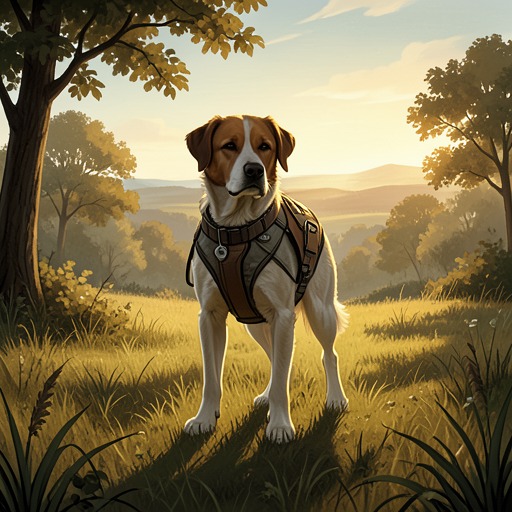
The Art of Racing in the RainIn Dogs, Enzo’s reflections make animal life more than a background to human affairs: dogs have their own ways of sensing, remembering, and making meaning, even when they cannot explain themselves in words. His belief that a dog ready to leave doghood behind may become a man gives that perspective a spiritual horizon. At the same time, the novel lets his confident theories about evolution and human society remain recognizably his own interpretations, not established scientific facts.
Identity and the Human-Animal Boundary
Enzo understands himself as human in spirit while acknowledging that he inhabits a dog’s body. The distinction matters to him: the body is a temporary form, whereas the soul carries the deeper identity. He believes that when a body becomes sufficiently human, a human soul can enter it, joining spiritual development to physical evolution rather than treating them as competing explanations of life.
That conviction shapes his account of his future. Enzo hopes to be reborn as a man, imagining hands with opposable thumbs and a small, dexterous tongue. He also fears that he will lose the memories and experiences accumulated with the Swift family. Since he cannot be sure those memories will survive, he tries to impress what he has learned deeply upon his soul. His imagined transformation is therefore not simply an escape from a dog’s physical limitations; it is an attempt to carry a hard-won understanding of life across a change of body.
A Dog’s Theory of Evolution
Enzo forms his ideas in part by watching television while Denny is away. Racing broadcasts are a favorite, but educational programs also prompt him to think about evolution, spirituality, and the place of animals in the world. He rejects the opposition he sees between scientific accounts of bodily change and spiritual accounts of the soul, proposing instead that both participate in the making of a human being.
He goes further, provocatively arguing that dogs, rather than chimpanzees, are humanity’s closest relatives. His case rests on an imaginative reading of the dewclaw as a pre-emergent thumb. Enzo speculates that selective breeding has suppressed dogs’ potential dexterity, and that human control of dogs reflects fear of what they might become. These claims reveal his suspicion of human authority as well as his desire for canine independence; the narrative presents them as Enzo’s conjectures, not as verified biology.
His argument also carries a personal charge. As a very young puppy, Enzo overhears a man suggest that his forelegs should be altered. The memory gives his reflections on the dewclaw and human intervention an intimate point of reference: the body is not an abstract stage of evolution when other beings can make decisions about it. His account turns a small anatomical feature into a question about who controls an animal’s future.
Perception, Instinct, and Communication
Dogs in Enzo’s narration understand human life through forms of perception that people may overlook. He describes recognizing Eve’s illness through an unusual odor before it was identified by medical examinations. In another domestic scene, he interprets tension around Denny’s racing absences through the taste of chemical changes in Eve’s body. These episodes give canine sensing a narrative authority, while remaining filtered through Enzo’s unusually reflective understanding of what he perceives.
That sensitivity does not give him a human means of communication. Enzo describes gestures as his available language, sometimes requiring conspicuous action because subtle signals may not make his meaning clear. His inability to speak creates a persistent divide: he can believe he has understood danger or emotion, yet cannot reliably convey what he knows. His account of Eve’s illness is especially painful for him because he believes his perception arrived before the family’s diagnosis, but he has no way to warn them in words.
Enzo also distinguishes his own restraint from ordinary canine instinct. He believes he can control the impulse to chase a running child, and Denny insists that Enzo would never hurt Zoë. Yet, during a period of grief and anger, Enzo gives way to an animal response and kills and eats a squirrel. The episode marks a rupture in his effort to live by human standards: his dog body and its impulses are not merely a shell he can disregard, even when he thinks of himself as human within.
Reincarnation, Death, and Memory
A television documentary about Mongolia supplies Enzo with his clearest account of canine reincarnation. He learns that a dog may be buried in the hills, with its master expressing the hope that it will return as a man. In the account he remembers, the dog’s soul is released to travel across the land before rebirth, and only dogs that are ready make that transition. Enzo accepts this story as true and repeatedly declares himself ready.
That belief informs his thoughts about aging and death. Enzo does not want love to become a reason for keeping him alive after his body has seriously declined. He fears that Denny would try to prolong his life out of affection, and imagines a future in which he might create a way for an ailing dog to choose death for himself. The idea reflects his insistence on agency, even as his concern is for the pain his death could cause Denny.
Near the end of his life, Enzo remembers the documentary’s image of the dead dog’s soul running freely through the world until it is ready to be reborn. The recollection does not erase the uncertainty of what comes next, but it gives his final passage a shape: death may be a release into continued movement rather than an absolute end. His hope of becoming human remains tied to memory, though the story leaves open whether a future life can preserve the particular memories he has tried to carry forward.
Narrative Significance
Through Enzo, dogs occupy a position both close to human beings and distinct from them. He participates in family life, reads human emotion through smell and bodily cues, and forms theories about the species that shelters and governs him. His perspective challenges the assumption that people alone possess inwardness or interpretive intelligence, while his inability to speak makes the gap between animal knowledge and human recognition consequential.
The novel does not resolve that gap by making Enzo’s ideas into objective doctrine. His account of dog evolution is speculative, and his faith in reincarnation is presented as a belief learned from television. What the narrative firmly establishes is his effort to understand experience: he watches, senses, remembers, and tries to communicate. Dogs become subjects with their own desires and limits, not simply symbols for human feeling. Enzo’s hoped-for transformation intensifies the question rather than closing it: whether he will become a man is uncertain, but his account insists that a dog’s life already contains thought, attachment, and a perspective worth hearing.